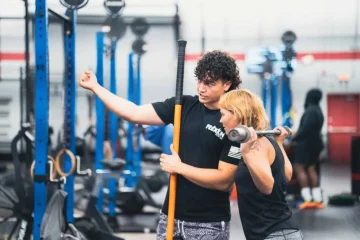

How Fitness Trainers Make Every Workout Count

Anyone who has spent time in a commercial gym knows the familiar scene of aimless effort. People wander from machine to machine, scroll through their smartphones between halfhearted sets, copy random routines from social media feeds, and wonder why their bodies look identical six months down the road. Sweat alone does not guarantee physical transformation. Effort without direction is simply wasted energy.
Fitness trainers make every single workout count by replacing guesswork with physiological precision. They do not view an hour in the gym as an isolated event of burning calories. Instead, they treat each workout as a calculated stimulus within a broader adaptation cycle. By managing variables like biomechanics, metabolic demand, motor unit recruitment, and mental focus, a skilled coach ensures that every repetition directly serves your ultimate goals.
The Science of Intentional Movement
The primary differentiator between an ordinary gym-goer and a trainer-led athlete is mechanical intent. Moving a weight from point A to point B does not automatically stimulate the target muscle group. Without proper form, the human body naturally relies on momentum, joint leverage, and secondary muscle groups to bypass physical fatigue.
A trainer forces your nervous system to focus on intentional contraction. By applying specific adjustments to foot placement, grip width, and torso angles, they align the line of force with the target muscle fibers.
-
Mechanical Tension Control: Muscle hypertrophy requires prolonged mechanical tension. Trainers eliminate the bounce at the bottom of a bench press or the hip swing in a bicep curl, forcing the target tissue to handle the entire workload.
-
Elimination of Energy Leaks: When an athlete lacks trunk stability, force escapes through the spine and hips rather than transferring into the barbell or ground. Trainers teach core bracing techniques that eliminate these leaks, instantly increasing power output.
-
Range of Motion Optimization: Partial repetitions often yield partial development. Trainers assess joint mobility to ensure you work through the deepest safe range of motion, creating superior muscle damage and tissue remodeling.
Masterful Regulation of Training Variables
Most unguided lifters alter only one training variable: the load on the bar. When that weight stops moving easily, progress stalls. Expert trainers treat workout programming like an intricate control board with dozens of dials. When one dial cannot move forward, they manipulate another to guarantee physical adaptation.
Tempo Manipulation
Lowering a barbell over three seconds creates vastly different cellular stress than dropping it in half a second. Trainers use eccentric pauses and slow negatives to increase time under tension without having to add dangerous amounts of joint-crushing weight. This protects connective tissue while still exhausting deep muscle fibers.
Rest Interval Discipline
Left to their own devices, most people rest either too long, allowing their heart rates to drop and muscles to cool, or too briefly, compromising force production on subsequent sets. Trainers monitor the clock with purpose. If the goal is raw neural strength, they enforce full three-minute recovery windows. If the goal is muscular endurance or metabolic conditioning, they keep rest periods sharp to force the body to clear lactic acid efficiently.
Volume and Density Calibration
Trainers monitor total volume, which is the product of sets, repetitions, and weight moved. By steadily condensing that volume into shorter time frames or adding targeted volume where your development lags, they ensure you never repeat the exact same workload week after week.
Real-Time Kinetic Chain Corrections
Injuries do not happen overnight; they accumulate across thousands of repetitions performed with subtle biomechanical compensations. When you exercise alone, it is physically impossible to view your own movement patterns from multiple angles in real time.
Trainers act as real-time biomechanical diagnostics. They notice minute discrepancies that you cannot feel:
-
A slight knee collapse during the ascent of a loaded squat.
-
An asymmetric shoulder elevation during overhead dumbbell presses.
-
A subtle shift into lumbar extension during a heavy deadlift or row.
-
Asymmetrical foot pronation during plyometric landings.
Catching these micro-faults mid-set prevents cumulative microtrauma to tendons, labrums, and intervertebral discs. More importantly, it teaches your central nervous system correct movement patterns, reinforcing optimal neuromuscular pathways that keep you durable for decades of training.
Targeting Specific Energy Systems
A frequent error in solo workout design is the confusion of metabolic pathways. People often try to turn strength training into high-intensity cardio, resulting in workouts that produce mediocre strength gains and mediocre cardiovascular adaptations.
Trainers organize sessions to target specific energy systems with surgical precision:
-
The Phosphagen System: For explosive power and absolute strength, trainers program short, high-intensity bouts lasting under ten seconds, backed by full recovery to let adenosine triphosphate stores regenerate.
-
The Glycolytic System: To build lactate threshold and anaerobic stamina, trainers design interval sequences of thirty to ninety seconds of intense output, training your body to buffer acidic waste products under duress.
-
The Aerobic System: For sustained work capacity and cardiovascular health, trainers establish structured zone two training blocks that build mitochondrial density without exhausting the central nervous system.
By isolating and developing these pathways separately, every minute spent sweating translates into measurable, functional performance.
Breaking Through the Mental Reserve
The human brain is hardwired to preserve energy and prevent physical exhaustion. Long before a muscle reaches true physiological failure, the central nervous system sends powerful distress signals: intense burning sensations, elevated breathing, and strong urges to set the weight down.
Most independent gym-goers stop their sets at this initial mental discomfort, leaving three, four, or five potential repetitions unperformed. True athletic adaptation, however, occurs in that narrow space between perceived exhaustion and genuine muscular failure.
A trainer provides the psychological security and external drive required to enter that zone safely. They know your movement patterns well enough to recognize when your muscles still have mechanical capacity, even when your mind wants to quit. They stand by to spot the movement, removing the fear of dropping a weight. That psychological partnership allows you to tap into your true physical reserves, turning an average set into a catalyst for actual physical change.
Fluid Session Adjustments
Rigid workout routines look great on paper, but human physiology is dynamic. Life stress, poor sleep, travel fatigue, dehydration, and nutritional shortfalls alter your daily baseline readiness.
An amateur lifter who arrives at the gym feeling run down either forces their planned heavy workout and gets hurt, or skips the workout entirely. A trainer knows how to pivot on the spot.
By evaluating your movement speed during warm-ups, your resting heart rate, and your posture, an experienced coach can assess your neuromuscular readiness within minutes. If your nervous system is compromised, they downshift the intensity:
-
Heavy compound squats may become tempo-based goblet squats or mobility work.
-
High-impact plyometrics might shift to aerobic sled pushes or machine-based unilateral training.
-
Volume can be trimmed back to maintain quality movement while avoiding excessive cortisol production.
This adaptability ensures that even on your worst days, the session stimulates your recovery and maintains your momentum rather than tearing your body down.
Frequently Asked Questions
How does a trainer know if a workout was truly effective if I am not sore the next day?
Delayed onset muscle soreness is an indicator of novel muscular damage, not an accurate gauge of workout quality. Trainers evaluate session success through measurable performance markers, such as improved movement mechanics, load progression, strict adherence to rest intervals, and volume output. Chasing soreness often leads to systemic inflammation and stalled recovery rather than sustainable progress.
Can a trainer help optimize workouts for people who have very limited time each week?
Trainers specialize in density-based training architectures like supersets, compound circuits, and cluster sets that maximize stimulus in short timeframes. By selecting multi-joint compound movements that train multiple large muscle groups simultaneously, a coach can deliver a comprehensive, highly effective full-body workout in thirty to forty-five minutes.
Why do trainers focus so much on warm-ups instead of jumping right into heavy lifting?
A targeted warm-up raises core tissue temperature, increases synovial fluid production in joints, and primes the nervous system for motor recruitment. Trainers use the warm-up to activate dormant stabilizers, like the gluteus medius and rotator cuff, ensuring that prime movers can perform safely at maximum capacity during the core lifts.
How do trainers prevent burnout when clients hit psychological plateaus?
When motivation drops, trainers alter the primary stimulus. They might introduce new exercise variations, shift the focus toward skill acquisition like kettlebell snatches or Olympic lifts, or change the rep cadence completely. Introducing novel neurological challenges keeps the brain engaged while continuing to develop physiological resilience.
What is the difference between working with a trainer and using a personalized workout app?
A digital application provides a static workout checklist, but it cannot observe structural joint alignment, assess movement compensation, or interpret subtle body language. A live trainer makes micro-adjustments in real time, spots heavy lifts safely, modifies exercises instantly around sudden aches, and supplies genuine human accountability that an algorithm cannot replicate.
How do trainers program workouts differently for fat loss compared to muscle building?
For muscle building, trainers prioritize mechanical tension, progressive overload, and specific rest intervals that allow complete recovery between hard lifting sets. For fat loss, they focus on preserving existing lean muscle mass with adequate resistance training while incorporating high-density work, supersets, and controlled conditioning intervals to maximize energy expenditure and cardiovascular conditioning.
Do trainers track data during sessions, and what metrics matter most?
Professional trainers systematically log loads moved, completed repetitions, set counts, rest durations, and movement quality notes. Over time, they review these numbers to track progressive overload, identify recovery trends, adjust total training volume, and verify that the client is moving steadily toward their targets without accumulating chronic physical fatigue.