
Vinyasa Across Generations: Reimagining Inter-Age Practice for Families
The beauty of vinyasa yoga lies in its adaptability. It can be dynamic for the young, restorative for the elderly, and grounding for everyone in between. In a world where generations often move at different paces—digitally, emotionally, and physically—vinyasa offers a rare space where family members can move together, breathe together, and reconnect through motion. It transforms yoga from a solo pursuit into a shared ritual of presence and empathy.
Why Multi-Generational Yoga Matters Today
Modern families are more fragmented than ever. Work schedules, schooling, and screen time often leave little opportunity for shared experiences. Practising yoga as a family brings connection back into the household through movement and awareness.
Unlike static exercise routines, vinyasa offers fluid adaptability. Its sequences can be scaled up or down according to age and ability, allowing everyone—from a grandparent to a child—to participate without feeling excluded. This creates inclusivity not through uniformity but through mindful variation.
The Flow That Unites: Intergenerational Rhythm and Breath
Every generation has a different tempo. Children move fast and spontaneously, adults balance efficiency with focus, while seniors value grace and steadiness. Vinyasa naturally accommodates these differences because it is built around breath—the universal rhythm that transcends age.
When families practise together, they unconsciously synchronise breathing patterns. This shared rhythm nurtures a deeper emotional bond. The energy becomes collective rather than individual, transforming the practice into a shared pulse of presence.
Group breathing has measurable psychological benefits too. Research on heart rate coherence shows that people who breathe in synchrony experience a collective calm, which strengthens empathy and social connection. This effect makes multi-age vinyasa a living metaphor for harmony—each person keeping pace with others while maintaining individuality.
Designing Flows for Different Ages
Intergenerational yoga is not about uniform movement; it’s about inclusive sequencing. The goal is to create a safe yet dynamic space where everyone can find their level of challenge.
Here’s how a balanced family sequence can be structured:
-
Warm-up: Gentle seated breathing or simple stretches (shared by all).
-
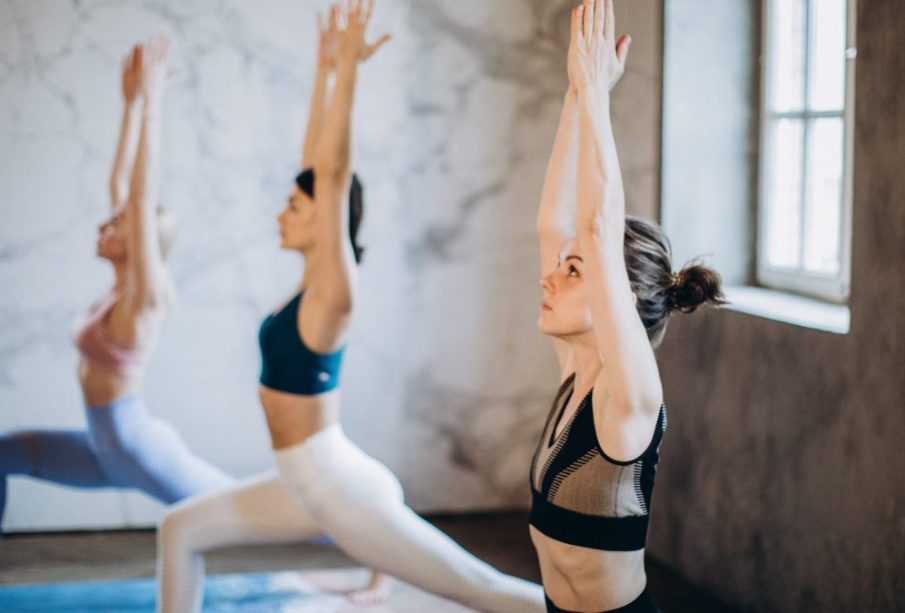
Main Flow: Adults and teens perform full sequences while children do playful versions (e.g., downward dog becomes “mountain stretch”). Seniors can focus on supported standing poses.
-
Transitions: Family members rotate positions, ensuring equal attention and fun interaction.
-
Closing Flow: Slow-paced stretches, guided relaxation, and gratitude sharing.
The emphasis is on movement as connection rather than performance.
Emotional Communication Through Shared Movement
Vinyasa, when practised across generations, becomes a non-verbal form of communication. Family members learn to observe one another, offer silent support, and celebrate mutual progress. It encourages compassion and patience—qualities that can fade in fast-paced urban life.
A child watching a grandparent hold a pose learns perseverance. A parent seeing a child’s uninhibited flow is reminded of playfulness. Each participant becomes a mirror, reflecting both strength and vulnerability.
Addressing Generational Differences in Practice
Different ages bring distinct needs and limitations. Understanding these ensures safety and inclusion:
-
Children: Need playfulness, imagination, and short bursts of movement. Use animal-inspired poses or partner balances.
-
Adults: Prefer sequences that challenge strength and endurance. Include planks, warriors, and controlled transitions.
-
Elderly members: Require joint-friendly modifications and support. Encourage props like chairs, blocks, or walls.
The teacher’s role is to weave these elements together, ensuring that the flow feels unified rather than divided.
How Families Benefit Beyond the Mat
The impact of practising together goes beyond flexibility or balance. Shared yoga sessions build understanding, reduce generational tension, and teach empathy through rhythm.
Key benefits include:
-
Improved family communication: Moving in synchrony builds trust and mutual awareness.
-
Reduced household stress: Shared relaxation lowers collective anxiety levels.
-
Enhanced discipline: Children observing consistent adult practice internalise focus and responsibility.
-
Strengthened emotional ties: Physical coordination mirrors emotional alignment.
Families that practise together also develop shared rituals—morning flows, weekend stretches, or evening breathing sessions—that anchor family connection in mindfulness.
Practical Tips for Home Practice
Multi-generational vinyasa can thrive at home with thoughtful setup and flexible routines.
-
Create a shared space: Move furniture aside and designate a yoga corner that welcomes everyone.
-
Agree on a playlist or ambient sound: Music should soothe both younger and older participants.
-
Shorten sessions: Fifteen to twenty minutes of consistent practice is more sustainable than long, infrequent sessions.
-
Introduce themes: Gratitude, patience, balance—each session can explore a shared value.
-
Rotate leadership: Let each family member guide a small part of the sequence, promoting confidence and inclusivity.
The Social Dimension: Community and Continuity
Family yoga often extends into community yoga, where generations from multiple households gather for inter-age sessions. These classes strengthen social fabric by replacing competition with collaboration.
Singapore’s growing culture of community wellness fits this model perfectly. Studios and instructors are creating intergenerational workshops that celebrate diversity of age and ability. The experience is less about performance and more about belonging.
Institutions like Yoga Edition exemplify this approach through inclusive programming and adaptive flow design that welcome practitioners at every stage of life. The result is a vibrant ecosystem of movement where everyone finds their place.
Teaching Approach: Compassion Over Correction
When guiding multi-age classes, instructors must shift from correctional feedback to compassionate facilitation. The focus moves from perfect alignment to shared experience.
Instructors can use gentle cues that apply to everyone, such as:
-
“Breathe with your neighbour.”
-
“Move at your rhythm, not at your neighbour’s speed.”
-
“Feel the space between movements, not just the movement itself.”
This inclusive language respects individuality while preserving unity.
Overcoming the Challenges of Generational Gaps
At times, physical differences may cause frustration or self-consciousness. Children might lose focus, while adults may push too hard. The key is to maintain humour and perspective. Family yoga is about togetherness, not perfection.
When mistakes happen, laughter bridges the gap. When fatigue appears, shared rest becomes connection. The imperfections are not obstacles—they are reminders that yoga’s core lesson is acceptance.
Long-Term Impact on Family Dynamics
Over months of shared practice, subtle changes emerge. Conversations become calmer, empathy increases, and problem-solving turns collaborative. Vinyasa trains not just muscles but relationships.
Families learn that flexibility is both physical and emotional. Flowing together teaches how to adjust to each other’s pace, an invaluable skill in modern life. The mat becomes a microcosm of family balance—sometimes leading, sometimes following, always moving in rhythm.
FAQs
Q1: Can vinyasa yoga be practised safely by seniors and children together?
Yes, with proper modifications. Seniors should avoid deep forward bends and high-impact transitions, while children can use creative variations to keep engagement high.
Q2: How often should families practise vinyasa together?
Two to three times a week is ideal. Shorter, consistent sessions create stronger bonding than sporadic long classes.
Q3: What if family members have different fitness levels?
That diversity enhances the practice. Each participant can adjust poses according to comfort, focusing on shared breath rather than identical movement.
Q4: Can intergenerational yoga replace traditional exercise for seniors?
It can complement it. Vinyasa enhances mobility, balance, and mental calm—key elements for healthy ageing.
Q5: How do we keep children engaged during family yoga sessions?
Include playful cues, storytelling, or partner poses. Let children contribute creative ideas to maintain enthusiasm.
In an era where digital devices often define connection, vinyasa yoga brings families back to the tangible rhythm of breath and touch. Through shared movement, generations rediscover understanding—not by speaking, but by flowing together.